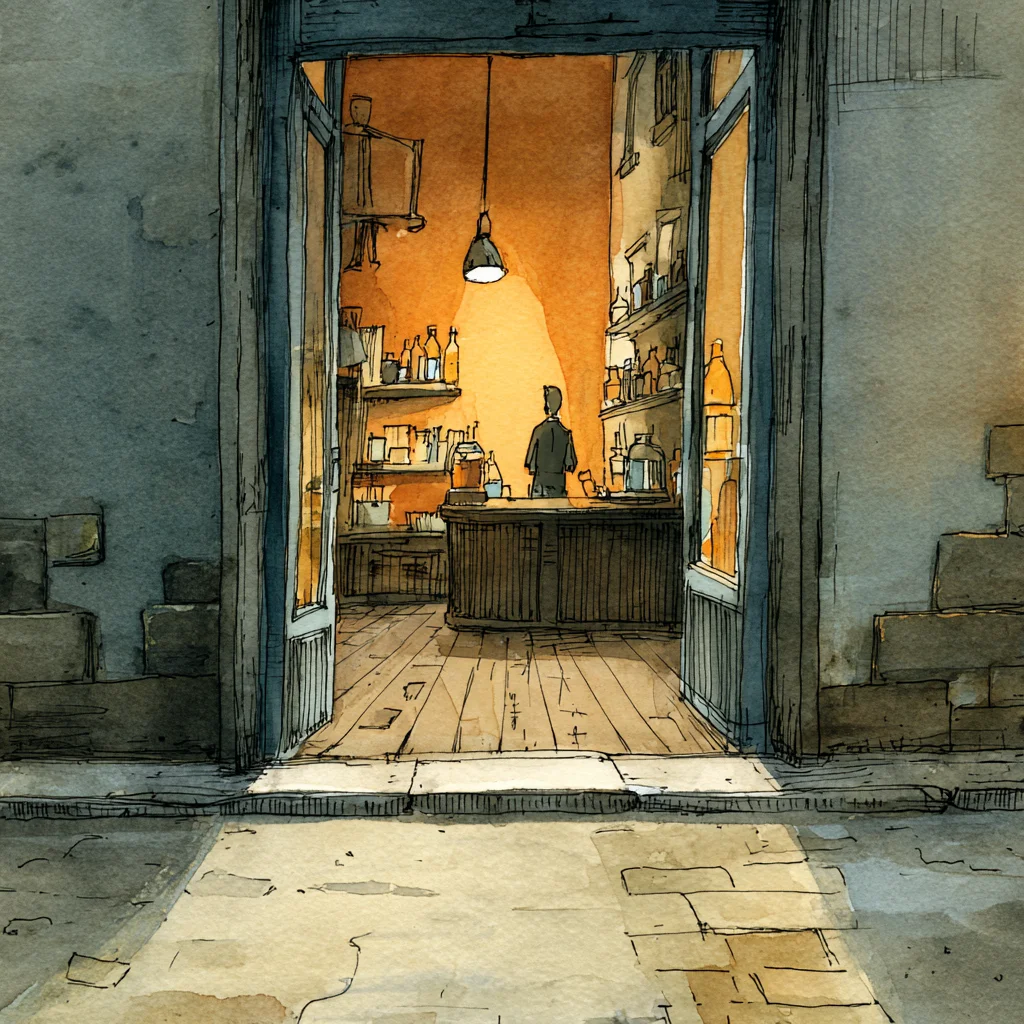
The Trusted Merchant is an archetype that represents the honest business owner. It stands in opposition to the more commonly portrayed archetype: the dishonest business owner, the used car salesman.
What are archetypes?
Archetypes represent an ideal pattern. Think of the archetype of the hero. You find it across stories going back to humans' earliest days.
I most easily grasp archetypes by thinking of a muffin mold. You can pour all sorts of ingredients into that mold and make all different types of muffins: banana, chocolate chip, lemon. Although each batch is different, each is still within the category of "muffin." The mold stays constant. The embodiment changes.
The hero archetype is the mold. Luke Skywalker, Harry Potter, Moana — all instances of it.
Archetypes help both understand the world and navigate it. When starting a new company, an entrepreneur facing fears and obstacles might dig deep and remind himself: be the hero. If summoning an archetype can help someone start a company, other archetypes should help us in other situations.
That's why I created one for selling.
The honest seller's problem
The mainstream opinion is that selling is an instrument of the dark side. Society doesn't hold salespeople in the same regard as a nurse or an elementary school teacher.
And because of that default negative viewpoint, do you know whose lives are made more difficult?
The honest salesperson's.
If a dishonest business person wants to be a crook and a cheat, they have no shortage of role models. But the well-intentioned business owners? What is the archetype for your way of operating?
Because there is nothing wrong with selling. It's your intention that matters.
In Star Wars, the Force isn't evil — it's how the Force is used, and how it gets used depends on the person wielding it. Darth Vader uses it for evil. Luke Skywalker uses it for good. Approach your business the same way.
My copywriting coach, David Garfinkel, says at the start of his podcast: "Copy is powerful." He's right. Copywriting is salesmanship in print, and when you learn it, you're acquiring a powerful skill. You decide how to wield it. But examples help, and that's what archetypes give you.
Enter: Ollivander
The best embodiment of the Trusted Merchant I've found is Ollivander from the Harry Potter books.
Harry Potter shops for his wand in the first book. Watch the four-minute scene from the movie. What do you notice?
Ollivander:
- Views sales as a process. He has Harry test different wands before finding the best fit.
- Broadcasts domain expertise. He knows his topic completely.
- Maintains perspective. He would love to have the famous Harry Potter as a customer, but he doesn't need Harry. He's emotionally unattached to the sale.
Three other examples worth looking at: George Bailey from It's a Wonderful Life, Q from James Bond, and the Tailor from John Wick.
You are not Gandalf
One more distinction before I leave you with this.
There's another archetype worth recognizing: the Mentor. Think of Gandalf, who shows up at Bilbo's door and redirects his entire existence. That figure has made its way into how a lot of consultants and coaches present themselves, and in most cases I think it overclaims. Most of what we sell is not transformational at the scale of an entire life, and I don't think that's something to apologize for.
You're not Gandalf. You're Ollivander, the expert who meets someone where they are, helps them find what they need, and sends them off better equipped for the journey they were already on.
That's the register the Trusted Merchant operates in, and it's the one that earns the most trust.
Marketing Is an Argument
The Trusted Merchant is the character. The Five Lightbulbs is the method. Start with the manifesto.
Read the Manifesto